
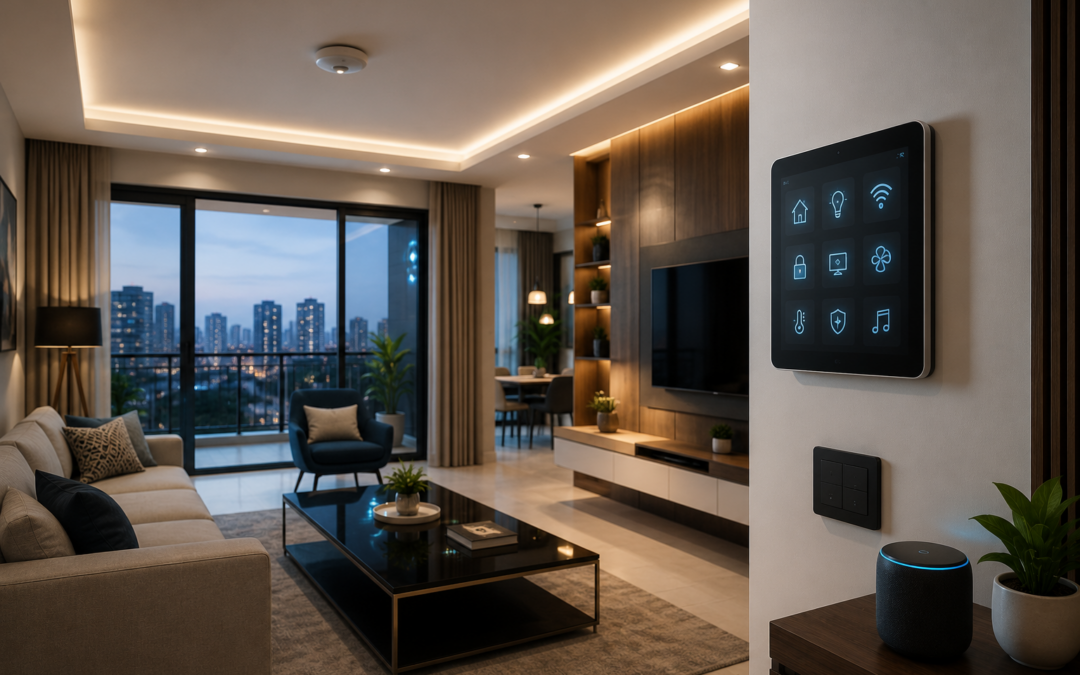
A smart home combines modern technology with everyday living to offer better convenience, security, energy efficiency, and comfort. In Pune, homebuyers in 2026 are increasingly looking for features such as smart door locks, video door phones, app-based visitor management, high-speed internet, EV charging readiness, and energy-efficient systems. These features not only improve daily life but also make homes more future-ready and attractive for long-term investment.
Why Smart Homes Are the Future of Residential Living
Buying a home today is no longer just about choosing a good location or a spacious floor plan. Modern homebuyers expect homes that simplify everyday life, improve safety, and adapt to changing lifestyles.
As Pune continues to grow as one of India’s leading IT and innovation hubs, the demand for smart homes in Pune is increasing rapidly. Professionals working in Hinjewadi, Kharadi, Baner, Wakad, and nearby business districts are seeking homes that support hybrid work, digital lifestyles, and sustainable living.
Whether you’re buying your first apartment or upgrading to a larger home, investing in a smart-enabled residence can provide long-term convenience and better property value.
Why Smart Homes Are Becoming Popular in Pune
Several factors are driving the demand for technology-enabled homes across Pune:
- Growth of the IT and startup ecosystem
- Hybrid and remote working models
- Increasing focus on home security
- Rising awareness of energy efficiency
- Demand for future-ready residential communities
- Growing adoption of electric vehicles
Today’s buyers are looking beyond amenities like swimming pools and clubhouses. They want homes that make everyday living easier, safer, and more efficient.
What Is a Smart Home?
A smart home is a residence equipped with connected devices and automation systems that allow homeowners to control different functions through smartphones, voice assistants, or digital applications.
These may include:
- Smart lighting
- Smart door locks
- Video door phones
- Automated curtains
- Digital visitor management
- CCTV surveillance
- Smart appliances
- Motion sensors
- Energy monitoring systems
Instead of performing these tasks manually, homeowners can manage them with a single tap or voice command.
8 Smart Home Features Every Buyer Should Look For
1. Smart Door Locks
Security is one of the biggest concerns for homebuyers.
Smart door locks offer multiple access options, including fingerprint recognition, PIN codes, RFID cards, and smartphone access. Many systems also send real-time notifications whenever someone enters or leaves the home.
These features provide greater convenience while reducing the risks associated with traditional keys.
2. Video Door Phones
Before allowing visitors inside, residents can view and communicate with them through a video door phone.
This feature is particularly useful for:
- Families with children
- Senior citizens
- Professionals living alone
- Frequent online shoppers
It adds an extra layer of security without compromising convenience.
3. App-Based Visitor Management
Many premium residential communities now use digital visitor management systems.
Residents can:
- Approve visitors remotely
- Track deliveries
- Receive instant notifications
- Manage domestic staff access
- Maintain visitor history
This creates a safer and more organised living environment.
4. High-Speed Internet Infrastructure
A modern home is incomplete without reliable internet connectivity.
Whether you’re attending virtual meetings, streaming entertainment, or managing smart devices, stable broadband has become essential.
Before purchasing a property, buyers should check:
- Fibre broadband availability
- Multiple internet service providers
- Strong mobile network coverage
- Power backup for networking equipment
Reliable connectivity is especially important for professionals working from home.
5. Smart Lighting Systems
Automated lighting allows homeowners to control lights using mobile applications or voice assistants.
Benefits include:
- Reduced electricity consumption
- Scheduled lighting
- Motion sensor activation
- Remote operation while travelling
- Improved home security
Smart lighting combines convenience with energy efficiency.
6. Advanced Security Systems
Modern buyers expect more than just gated communities.
Today’s smart residential projects increasingly include:
- CCTV surveillance
- Motion sensors
- Digital access control
- Emergency response systems
- Intercom integration
These features help create a secure environment for residents and visitors alike.
7. Energy-Efficient Features
Sustainability has become an important consideration when buying a home.
Look for projects that include:
- LED lighting
- Solar-powered common areas
- Water-efficient fixtures
- Rainwater harvesting
- Energy-efficient lifts
- Waste management systems
These features reduce utility costs while supporting environmentally responsible living.
8. EV Charging Readiness
Electric vehicle ownership is steadily increasing across India.
Residential communities that provide EV charging stations—or at least infrastructure to support future installation—are becoming increasingly attractive to homebuyers.
Future-ready developments are designed to adapt to evolving transportation needs rather than requiring expensive upgrades later.
How Smart Homes Improve Everyday Living
Smart homes simplify daily routines while enhancing comfort and efficiency.
Some practical benefits include:
- Better home security
- Lower electricity bills
- Remote control of household systems
- Increased convenience
- Improved energy management
- Enhanced lifestyle experience
- Greater peace of mind while travelling
Rather than being luxury features, many of these technologies are quickly becoming standard expectations among urban homebuyers.
Traditional Homes vs Smart Homes
| Feature | Traditional Home | Smart Home |
|---|---|---|
| Door Security | Mechanical Locks | Smart Digital Locks |
| Visitor Access | Manual Verification | Video Door Phone & Digital Approval |
| Lighting | Manual Switches | Automated & App-Controlled Lighting |
| Energy Usage | Limited Monitoring | Energy-Efficient Systems |
| Connectivity | Basic Internet | Fibre-Ready Smart Infrastructure |
| Convenience | Manual Operations | Mobile & Voice-Controlled Functions |
What Should Buyers Check Before Purchasing?
Before finalising a property, ask these important questions:
✅ Does the project offer fibre broadband connectivity?
✅ Are smart security features included?
✅ Is visitor management digitally enabled?
✅ Does the community provide power backup for essential services?
✅ Are there provisions for EV charging?
✅ Does the project include energy-efficient infrastructure?
Choosing a home that supports future technologies can improve your lifestyle today while protecting your investment for years to come.
Are Smart Homes Worth the Investment?
For many homebuyers, investing in a smart home is no longer about luxury—it’s about making a future-ready decision. While homes with smart features may have a slightly higher initial cost, they often provide long-term benefits that extend beyond convenience.
Some of the key advantages include:
- Lower electricity consumption through energy-efficient systems
- Improved home security with smart surveillance and access control
- Enhanced comfort through automation
- Better resale value as buyer preferences evolve
- Reduced maintenance through smart monitoring systems
As technology continues to become an integral part of modern living, homes equipped with digital infrastructure are expected to remain attractive to future buyers.
How Modern Residential Communities in Pune Are Evolving
Across Pune, residential developments are being designed to support changing lifestyles rather than simply providing living spaces.
Today’s buyers expect:
- Better connectivity
- Open green spaces
- Smart security
- Sustainable infrastructure
- Wellness-focused amenities
- Digital convenience
Leading residential communities in locations such as Hinjewadi, Kharadi, and Bhugaon are responding to these expectations by offering thoughtfully planned environments that combine comfort with modern technology.
Projects such as Park Titan, Park Eden, and Park Pebbles reflect this broader trend in Pune’s real estate market. While each project has its own unique identity, they represent how residential communities are increasingly focusing on smarter planning, improved lifestyle amenities, and future-ready infrastructure rather than simply adding premium features.
Expert Tips Before Buying a Smart Home
Before making your final decision, keep these practical tips in mind:
✔ Prioritise Everyday Convenience
Choose features that genuinely improve daily life instead of selecting technology that may never be used.
✔ Check Internet Infrastructure
Most smart home devices depend on reliable internet connectivity. Ensure the project supports fibre broadband and has good network coverage.
✔ Evaluate Security Systems
Ask about CCTV coverage, access control, visitor management, and emergency response systems before purchasing.
✔ Think Long-Term
Technology evolves quickly. Look for homes that can easily accommodate future upgrades without requiring major renovations.
✔ Compare Overall Value
Instead of focusing only on price per square foot, consider the long-term benefits of smart infrastructure, energy savings, and enhanced security.
Key Takeaways
If you’re planning to buy a flat in Pune in 2026, consider these essentials:
- Smart security systems improve safety.
- High-speed internet is now a necessity.
- Energy-efficient homes help reduce monthly utility costs.
- Digital visitor management enhances convenience.
- EV-ready infrastructure supports future mobility.
- Smart homes offer better long-term value and resale potential.
A modern home should not only meet your needs today but also adapt to the lifestyle demands of tomorrow.
FAQ
What is a smart home?
A smart home uses connected devices and automation to control systems such as lighting, security, appliances, and climate through smartphones, apps, or voice assistants.
Which smart home features are most important?
Some of the most valuable features include smart door locks, video door phones, app-based visitor management, fibre broadband connectivity, smart lighting, advanced security systems, and energy-efficient infrastructure.
Are smart homes suitable for families?
Yes. Smart homes provide better security, greater convenience, improved energy efficiency, and a more comfortable living environment, making them ideal for families, working professionals, and senior citizens.
Do smart homes save electricity?
Yes. Smart lighting, automated appliances, motion sensors, and energy-monitoring systems help reduce unnecessary power consumption and improve overall efficiency.
Can smart homes increase property value?
Homes with modern technology and future-ready infrastructure are increasingly preferred by buyers. As demand for connected living continues to grow, smart homes are likely to remain attractive in the resale market.
Conclusion
The way people buy homes is changing. Today’s homebuyers are looking beyond spacious layouts and premium amenities—they want homes that are secure, connected, energy-efficient, and ready for the future.
As Pune continues to evolve into one of India’s leading technology and business hubs, smart homes are becoming an important part of modern residential living. Features such as digital security, home automation, reliable internet connectivity, and sustainable infrastructure are no longer optional—they are becoming everyday expectations.
Whether you’re purchasing your first apartment or upgrading to a larger home, choosing a property that embraces smart living can enhance your lifestyle while supporting long-term value.
If you’re exploring residential communities in Pune, focus on developments that combine thoughtful planning, modern technology, and quality construction. Future-ready projects such as Park Titan, Park Eden, and Park Pebbles reflect the growing preference for smarter, more connected living environments, helping buyers invest not just in a home, but in a lifestyle designed for tomorrow.